
Hardscape Built to Survive Freeze-Thaw Cycles
Brickscape & Hardscape in Lebanon for patios and walkways exposed to Appalachian weather extremes
Paver patios and brick walkways fail in this region when contractors skip base preparation or ignore how freeze-thaw cycles shift improperly compacted foundations. Luke's Land Management installs brickscape, pavers, patios, and hardscape structures with grading and drainage built into the foundation, not added afterward. The process involves excavation to proper depth, compacted gravel base layers that resist frost heaving, and material selection that tolerates temperature swings without cracking or spalling. You end up with surfaces that remain level and intact through multiple winters instead of developing the dips, cracks, and separated joints common in rushed installations.
Installation begins with site grading using a Bobcat E55 to establish proper slope for water runoff, followed by excavation to depth requirements that account for freeze penetration. A compacted aggregate base is placed in layers, with each layer checked for density before the next goes down. Drainage is integrated directly into the base design, either through perimeter drains or permeable base materials that channel water away from the paver surface.
Arrange an on-site consultation to review your property's grading and drainage before hardscape placement..
What You Notice Once Hardscape Installation Is Finished
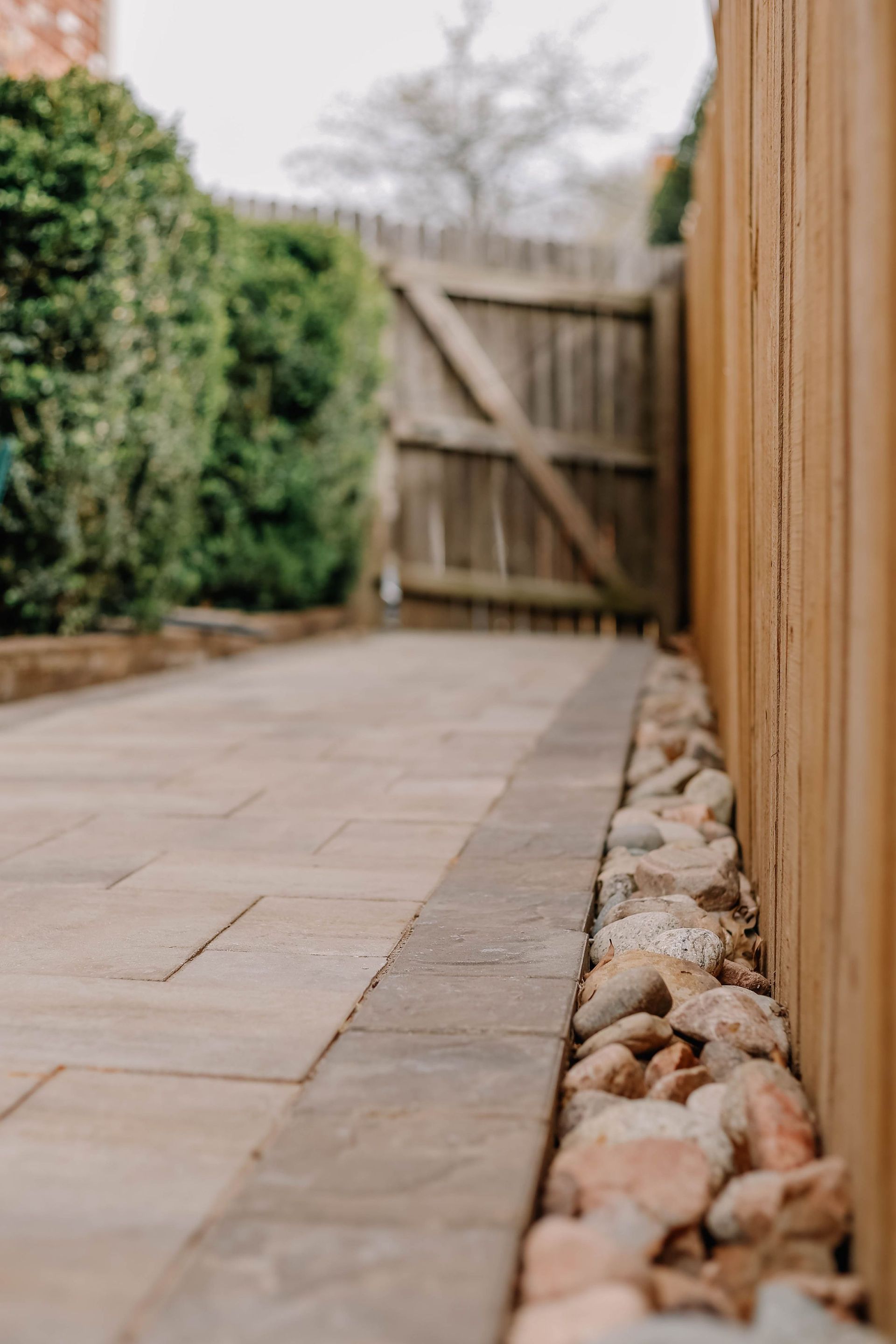
After installation, your patio or walkway sits level without dips or high spots, and water drains off the surface rather than pooling in low areas. The pavers remain tight and uniform because the base was compacted to density standards that prevent settling. Edges are defined with restraints that keep border pavers from shifting outward over time.
Through the first winter and into spring thaw, the surface stays level without heaving or cracking. Joints between pavers remain consistent because the base does not shift when ground moisture freezes and expands. Water continues to drain away from the hardscape rather than penetrating joints and causing frost damage from below.
The service includes site grading, excavation, base preparation, material placement, and drainage integration. It does not include decorative lighting installation or landscaping around the hardscape perimeter, though those elements can be coordinated as separate components of a larger site plan..
Common Questions About Hardscape Installation
Homeowners in Lebanon often want clarity on why hardscape costs vary and what preparation steps actually prevent the failure patterns common in this climate.
Why does base preparation matter more in this region than in other areas?
Appalachian freeze-thaw cycles cause ground expansion and contraction that lifts improperly compacted bases, creating the uneven surfaces and separated joints you see on poorly installed patios after just one or two winters.
How deep does excavation need to go for a paver patio?
Excavation depth depends on soil type and drainage conditions, but in most cases the base extends below the frost line and includes multiple compacted layers of aggregate to resist heaving when ground moisture freezes.
What changes after a hardscape installation is complete?
The surface drains water away from your home without pooling, remains level through seasonal ground movement, and provides a stable walking or seating area that does not shift or develop trip hazards from uneven pavers.
What materials hold up best in freeze-thaw conditions?
Material selection focuses on pavers with low water absorption rates and high compressive strength, along with joint sand or polymeric filler that resists washout and prevents weed growth between pavers.
How is drainage integrated into the hardscape design?
Grading establishes slope away from structures before excavation begins, and permeable base layers or perimeter drains channel water away from the paver surface to prevent saturation and frost damage from below.
Luke's Land Management installs brickscape and hardscape throughout the Lebanon area with base preparation and drainage methods that account for mountain terrain and freeze-thaw cycles. Request a property evaluation to identify grading and drainage requirements before installation begins.