
Foundation Work That Starts Below Grade
Concrete Pads in Lebanon for sheds, equipment, and structures requiring stable, level foundations in mountain terrain
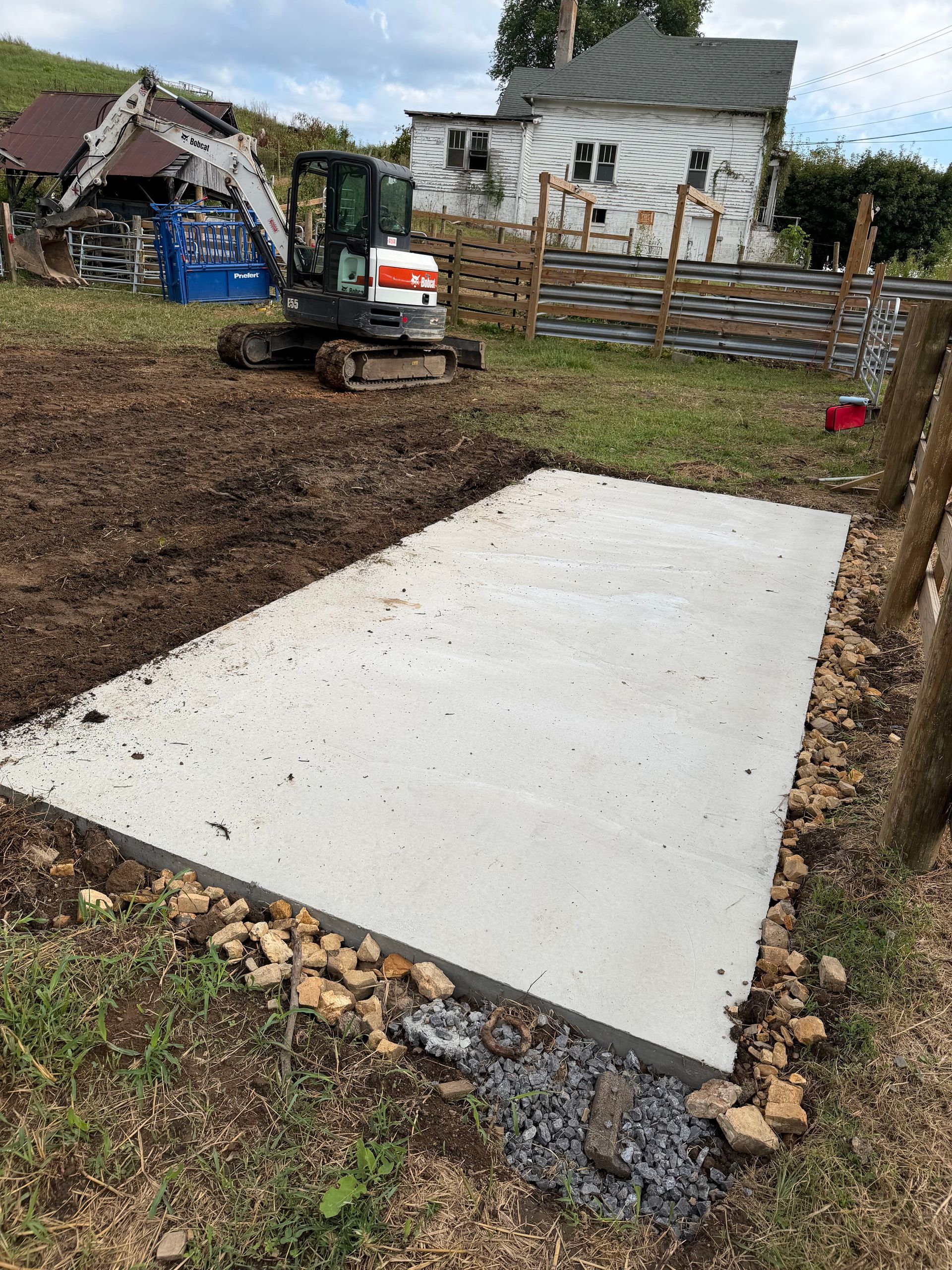
Concrete pads crack, settle, or heave when contractors pour over unprepared ground without correcting drainage or compacting the base. The work begins with grading and excavation using a Bobcat E55 to establish proper slope and remove unstable soil, followed by utility line identification to prevent future damage from settling or erosion. Luke's Land Management provides concrete pad installation with full site prep that accounts for how freeze-thaw cycles and seasonal ground movement affect foundation stability in the Appalachian region. The process involves base compaction, drainage correction, and proper concrete placement so your pad remains level and crack-free through multiple winters instead of developing the settlement cracks, surface pooling, or corner heaving common in rushed installations.
Site preparation begins with excavation to remove topsoil and organic material that will settle under load, exposing stable subgrade for the compacted base. Grading establishes drainage slope away from the pad area, and utility lines are cleared to avoid future issues. A compacted aggregate base is placed in layers, with each layer checked for density before forms are set and concrete is poured. The approach is site-specific because soil conditions, drainage patterns, and freeze penetration depth vary across properties.
Schedule a property consultation to evaluate grading and drainage before concrete pad installation.
What Concrete Pad Installation Actually Accomplishes
The process starts with excavation to proper depth, followed by compaction of the aggregate base that will support the concrete slab. Forms are set to define the pad perimeter and control thickness, and concrete is placed with proper finishing techniques to prevent surface cracking. Grading corrections made during site prep ensure that water drains away from the pad rather than pooling along edges or flowing underneath, which causes the settlement and erosion that lead to cracking.
Once the concrete cures, you have a level surface that does not shift or settle when equipment or structures are placed on it. The pad sheds water rather than allowing it to pool, which prevents freeze-thaw damage to the concrete surface and undermining of the base from below. Corners remain level without heaving because the base was compacted uniformly and drainage was corrected before the pour, not added as an afterthought when problems develop.
Concrete pad installation includes site grading, excavation, utility line clearance when necessary, base preparation, and concrete placement with proper finishing. It does not include structure construction or equipment placement on the finished pad, though the pad is designed to support the intended load. Factors like soil bearing capacity, drainage conditions, and freeze depth influence base design and determine how deep excavation must go before concrete is poured.
Common Questions About This Service
Property owners planning to add outbuildings, equipment pads, or other structures typically want clarity on what site prep involves and why foundation work costs vary based on existing conditions.
What causes concrete pads to crack or settle after installation?
Pads fail when the base was not compacted properly or when drainage allows water to flow underneath, eroding soil and creating voids that cause the concrete to settle unevenly and crack along stress lines.
How does site grading affect concrete pad durability in Lebanon?
Grading corrections made before excavation redirect water away from the pad area, preventing the saturation and erosion that undermine bases and cause settling or heaving when ground freezes and thaws through seasonal cycles.
What site prep happens before concrete is poured?
Excavation removes topsoil and unstable material, utility lines are located and cleared, and a compacted aggregate base is placed in layers to create a stable foundation that resists settling and frost heaving.
What changes after a concrete pad is installed with proper base preparation?
The surface remains level without settlement cracks or corner heaving, water drains away from the pad rather than pooling along edges, and the pad supports intended loads without shifting or developing surface damage through freeze-thaw cycles.
Can utility line work be included as part of the concrete pad installation?
Yes, utility line identification and clearance are handled during site prep to prevent future damage from settling or erosion, and the grading work accounts for existing drainage patterns before excavation and base compaction begin.
Luke's Land Management installs concrete pads throughout Lebanon, Wise County, and Russell County with excavation, grading, and base preparation designed for mountain terrain and freeze-thaw conditions. Request a site evaluation to review your property's soil, drainage, and foundation requirements before installation begins.