
Hazard Trees Removed Before Structure Damage
Tree Services in Lebanon for dead trees near power lines, structures, or property access routes
Dead trees near residential power lines create hazards across Appalachian properties where timber stands age and storm damage leaves weakened trunks leaning toward structures or utility infrastructure. Luke's Land Management removes dead and danger trees using a climber trained in rigging techniques for controlled removal in tight spaces common around the Lake area, Marion, and Abingdon. You see eliminated fall risks and cleared access routes without damaged power lines or secondary cleanup from uncontrolled drops.
The process begins with dead tree assessment to identify lean direction, decay extent, and proximity to structures or utility lines. Climbers rig sections for controlled lowering when space is limited, preventing uncontrolled falls that damage roofs, fences, or underground utilities. The crew handles utility line work by operating near power infrastructure with clearance awareness, a critical requirement in Russell County where residential power runs through forested corridors.
Arrange a property evaluation to identify dead trees posing immediate hazards near structures or power lines.
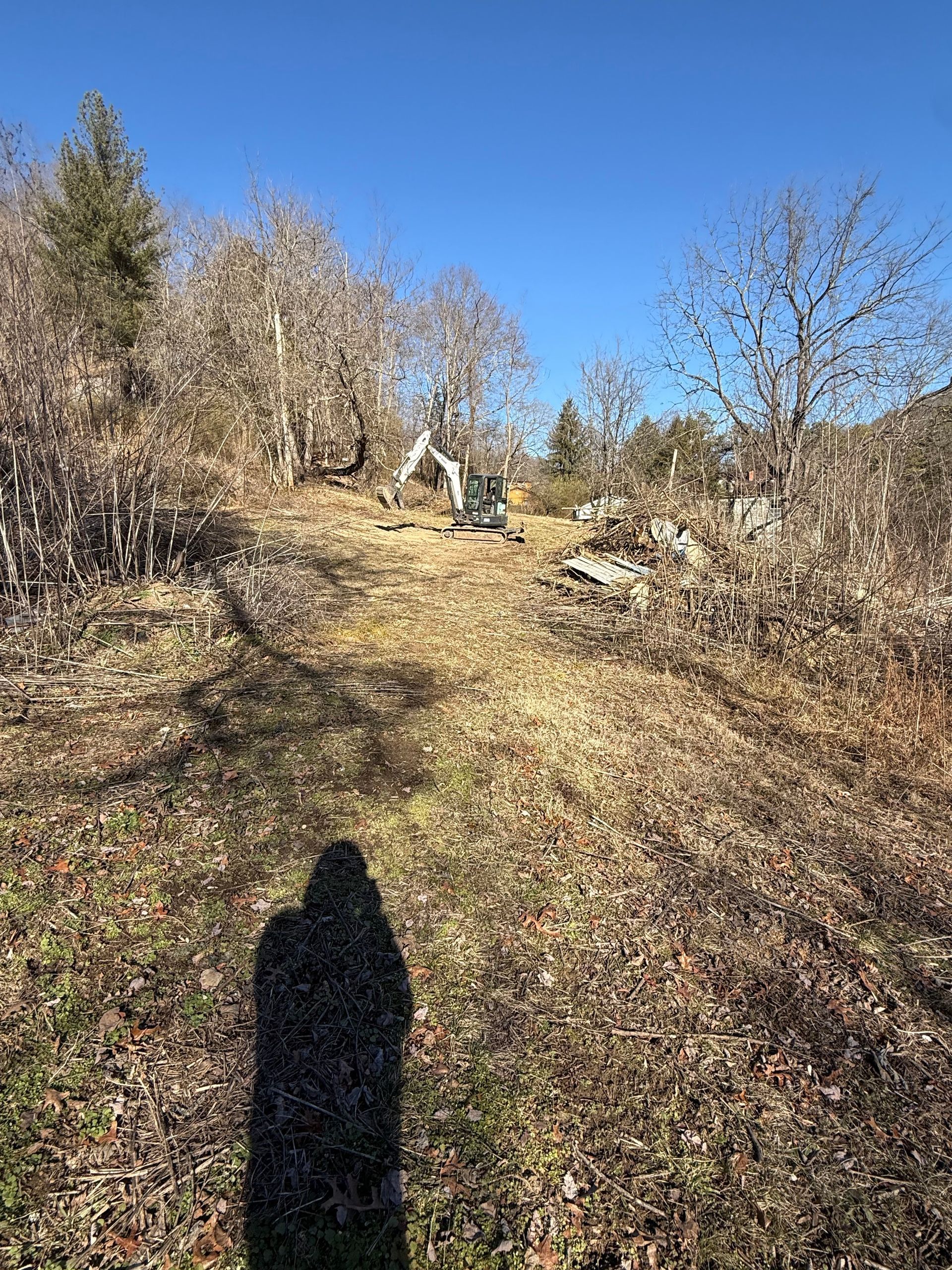
How Dead Tree Removal Addresses Safety Risks
Dead tree removal involves more than cutting and hauling—it requires assessing decay patterns to predict how the tree will behave during cutting, rigging sections when the tree is too close to structures for a standard fell, and coordinating cuts to prevent barber chair splits common in decayed Appalachian hardwoods. The climber on the crew handles vertical cuts and limb removal before trunk sections are lowered.
Once the tree is removed, you notice eliminated fall risks near structures, restored clearance around power lines, and removal of root systems that were destabilizing nearby soil or hardscapes. Stump grinding is available as an additional service when the stump location interferes with mowing, construction, or replanting plans. The work prevents the scenario where a dead tree falls during ice storms or high winds common in the Wise County area, causing roof damage or power outages.
Tree removal often integrates with land clearing projects when dead timber is identified during initial site walks, allowing for combined service visits rather than separate mobilizations. This coordination reduces overall project costs and prevents delays when clearing work is stalled by hazard trees.
Answers to Frequent Service Questions
Tree removal decisions depend on hazard assessment and site access conditions across properties in the Lebanon and surrounding region.
What makes a tree a removal candidate?
Dead trees with visible decay, hollowed trunks, significant lean toward structures, or proximity to power lines qualify as hazards requiring removal. Storm-damaged trees with split trunks or exposed root systems also present fall risks that worsen over time.
How does rigging work for trees near structures?
Climbers attach ropes to upper sections of the tree and lower cut pieces in controlled descents, preventing uncontrolled falls that damage roofs, siding, or underground utilities. Rigging is required when clearance between the tree and nearby structures is less than the tree's height.
Why does utility line proximity affect removal methods?
Power lines across the Lebanon and Abingdon area often run through tree canopies, requiring clearance during removal to prevent contact that causes outages or electrical hazards. The crew maintains safe distances and coordinates cuts to directfall away from utility infrastructure.
What happens to the wood after removal?
Tree sections are cut into firewood lengths if you want to keep the material, or hauled off-site as part of the removal service. Large trunks can be milled into lumber if diameter and wood quality justify the additional handling.
When should dead trees be removed?
Dead trees should be removed before ice storms or high wind events increase fall likelihood, typically during late fall through early spring when frozen ground provides stable equipment access. Waiting until after a tree falls increases removal costs and creates secondary damage to structures or landscaping.
Luke's Land Management operates across a 40-plus-mile service radius covering Russell County, Marion, and Wise County with a dedicated climber and rigging equipment for high-risk removals. Schedule a hazard assessment to review dead trees on your property and determine removal priorities.