
Wastewater Systems Designed for Appalachian Soil
Septic System Install & Repair in Lebanon for properties with failing drain fields, new construction sites, or systems requiring regulatory updates
Clay and rocky Appalachian soil complicates septic system installation across Russell County, where improper drainage design leads to system failures that surface as wet spots in yards, slow drains inside homes, or septic odors near drain field areas. Site evaluation determines soil percolation rates and identifies bedrock or clay layers that require modified drain field layouts to meet health department regulations. Luke's Land Management installs and repairs septic systems with full excavation, permitting, and site-specific design adjusted for Lebanon and Wise County soil conditions. Projects typically range from six thousand to ten thousand dollars depending on system size, soil challenges, and required regulatory upgrades.
Installation involves excavating the tank location and drain field trenches, placing and leveling the septic tank, laying perforated distribution pipes in gravel-bedded trenches, and backfilling with material that supports drainage while preventing soil intrusion into pipes. Repair diagnostics identify whether the problem stems from tank baffles, distribution box failures, or drain field saturation, then address the specific failure point rather than replacing the entire system when partial repairs restore function.
Schedule a site assessment to review soil conditions and determine the system design required for your property.
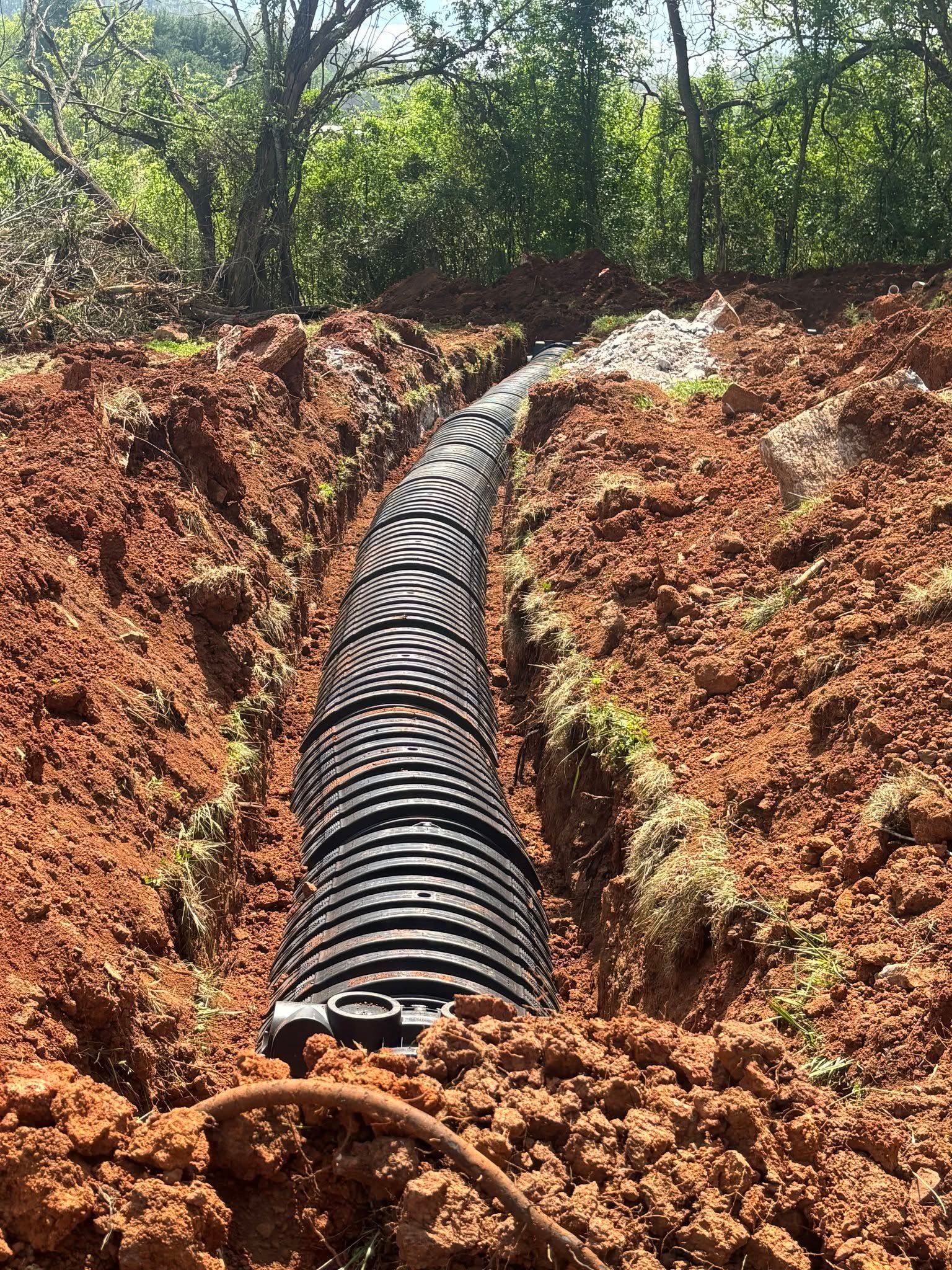
What Proper Septic Installation Requires
Septic installation requires site evaluation that measures soil percolation rates, identifies seasonal water table levels, and locates bedrock or clay layers that block drainage. These factors determine whether a conventional gravity system works or if alternative designs like mound systems or pressurized distribution are needed to meet health department standards. Regulatory permitting confirms that the system design matches site conditions and maintains required setbacks from wells, property lines, and surface water.
Once installation is complete, you notice restored plumbing function without slow drains or backups, eliminated wet spots or odors in the yard above the drain field, and a system designed to handle household wastewater without surfacing during rain events. Properly installed systems handle spring runoff common in the Abingdon and Russell County area without saturating drain fields or causing effluent to reach the surface. The installation prevents the scenario where failing systems contaminate wells or create health hazards that require expensive emergency repairs.
Repair work addresses specific failure points such as broken distribution boxes, clogged outlet baffles in the tank, or saturated drain field sections that need replacement. Diagnosing the failure source before excavation prevents unnecessary work and reduces repair costs compared to full system replacement.
What Property Owners Usually Ask
Septic system decisions depend on understanding soil limitations and regulatory requirements across the Lebanon and Wise County region.
What affects septic system cost in this area?
Soil conditions drive cost—rocky subsurface requires additional excavation, clay soil may require alternative drain field designs, and sloped sites need pumps or mound systems that increase material and installation expense. Permit fees and system size based on bedroom count also affect total project cost.
How do you know if a septic system is failing?
Wet spots or sewage odors in the yard above the drain field, slow drains throughout the house, or gurgling sounds in plumbing indicate system problems. Failures often worsen during spring when high water tables saturate drain fields already compromised by soil compaction or root intrusion.
Why does soil type matter for septic installation?
Clay soil in the Lebanon and Wise area drains slowly and causes effluent to pond in drain fields, requiring larger drain field areas or alternative designs. Rocky subsurface limits excavation depth and may require blasting or system relocation to find suitable soil for drainage.
What's included in a typical septic installation?
The work covers site evaluation, permit acquisition, excavation of tank and drain field areas, tank and pipe installation, gravel bedding placement, backfill and compaction, and final inspection by the health department. Repair projects include diagnostics to identify failure points and replacement of damaged components.
When is the best time to install a septic system?
Late summer through fall provides dry soil conditions that simplify excavation and prevent muddy sites that delay equipment work. Spring installation is possible but requires working around wet ground and higher water tables common across Russell County during snowmelt and rain periods.
Luke's Land Management handles septic installation and repair across Lebanon, Wise, Abingdon, and Russell County with spring pipeline work expected for seasonal demand. Arrange a consultation to review your property's soil conditions and determine system design requirements based on health department regulations.